
Collaboration was the key for Five Towns College at the 2026 Great South Bay Music Festival
By Cassie Schneider
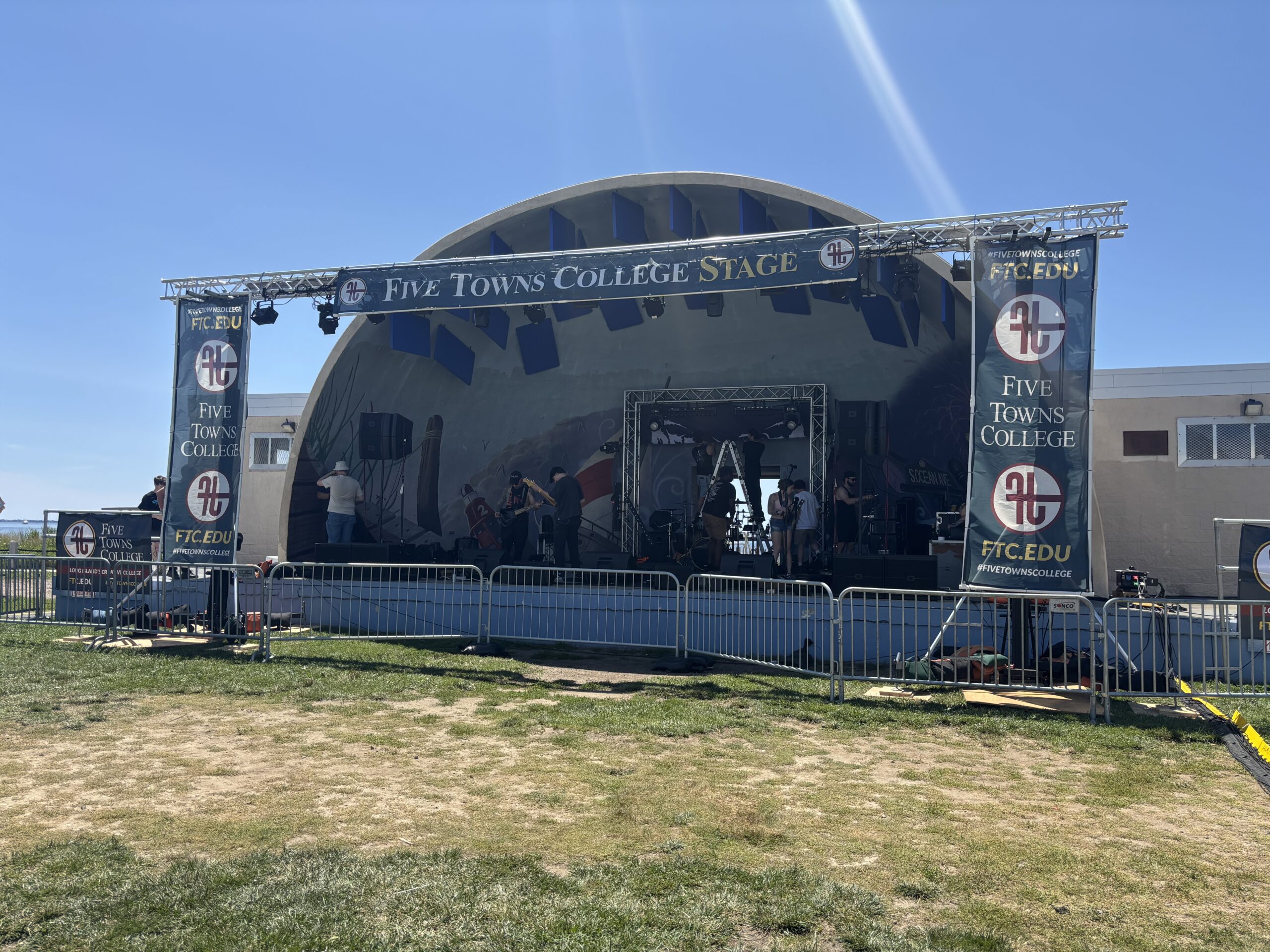
The Great South Bay Music Festival, Long Island’s “longest running, and largest four day music, art & cultural event,” celebrated its 17th year at Shorefront Park in Patchogue, NY from July 23-26. While festivalgoers came for the live music, food, and entertainment, one tent directly in front of the festival’s iconic clamshell stage showcased something equally impressive—the talent and teamwork of Five Towns College students and faculty.
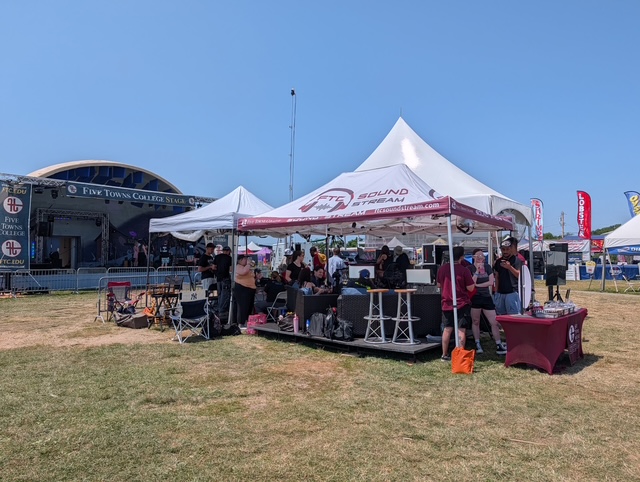
The Five Towns College multimedia production tent served as the operational hub for the college’s Mass Communication, Audio, Film, Production Design, and Film & TV departments. Across four days, seventeen bands played on the Five Towns College Stage, which was run by Audio students under the guidance of faculty. Five Towns also oversaw and ran audio for the Jambalaya stage, which hosted another fifteen bands.
Five Towns College Tech Supervisor and Professor Michael Peters emphasized the importance of this dynamic educational experience, saying, “It is real-world experience; you get the chance to collaborate with all different aspects of production, from audio, video, and on-air personalities. Everyone works toward one specific goal.”
Students did everything from hanging stage lights and managing electrical systems to mixing live audio, operating cameras, producing broadcasts, radio hosting, and creating content for social media; they were immersed in nearly every aspect of live event production.
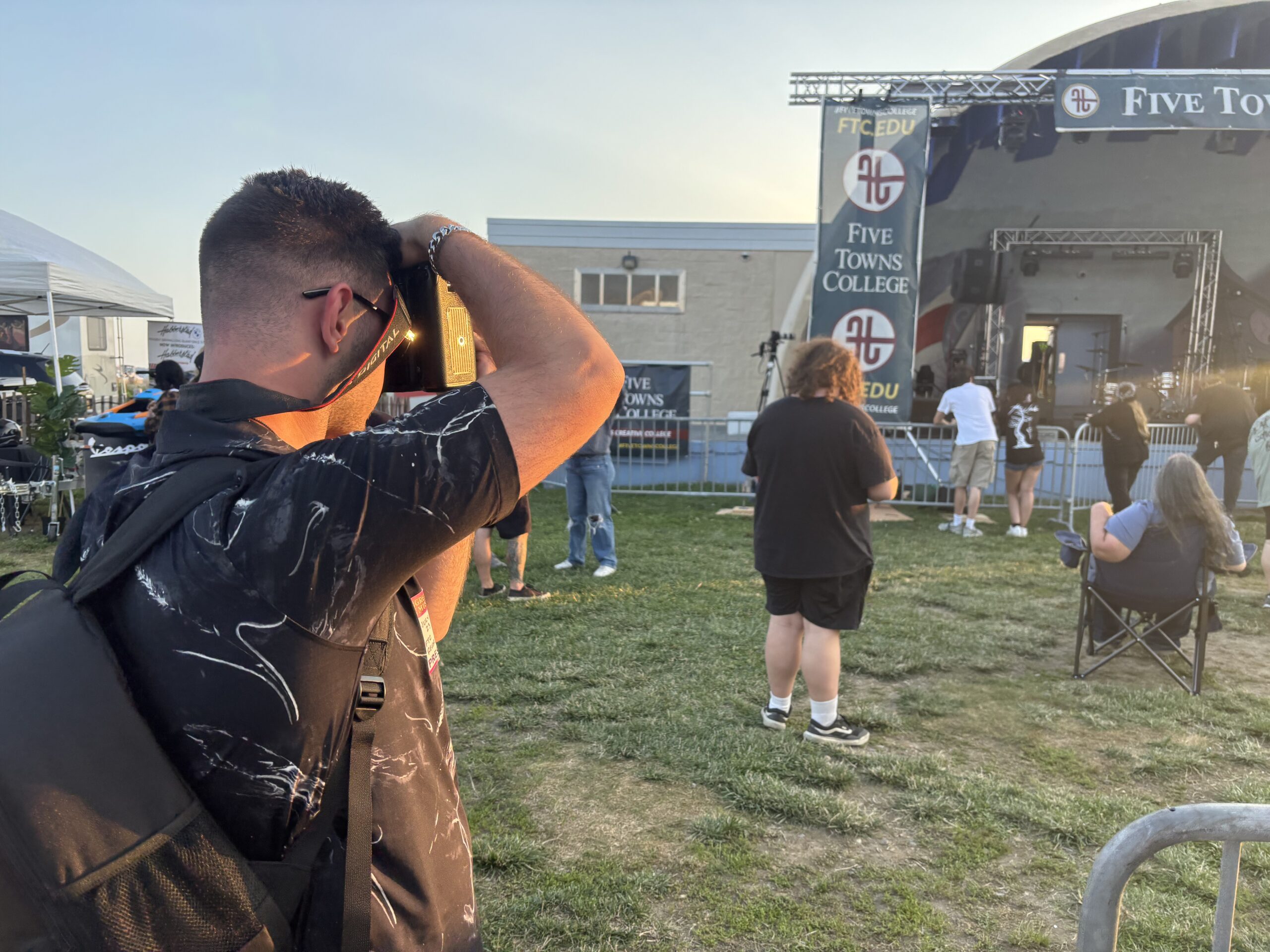
Mass Communication major Adrian Kartalozi worked with the video team and took photos around the festival grounds for the college’s social media platforms. “This is a great opportunity to hone my skills as an event photographer,” Kartalozi said. One of the highlights of Kartalozi’s experience was photographing Sublime on the Main Stage on Day 2.
Theatre major Sammi Rooney, who also serves as the college’s electrical crew head for the campus’ Performing Arts Center, helped with the lighting for both festival stages. This process involved hanging all the lights on stage and ensuring they were properly wired to their respective lighting boards. “We are all taking turns running the board while the bands play,” said Rooney.
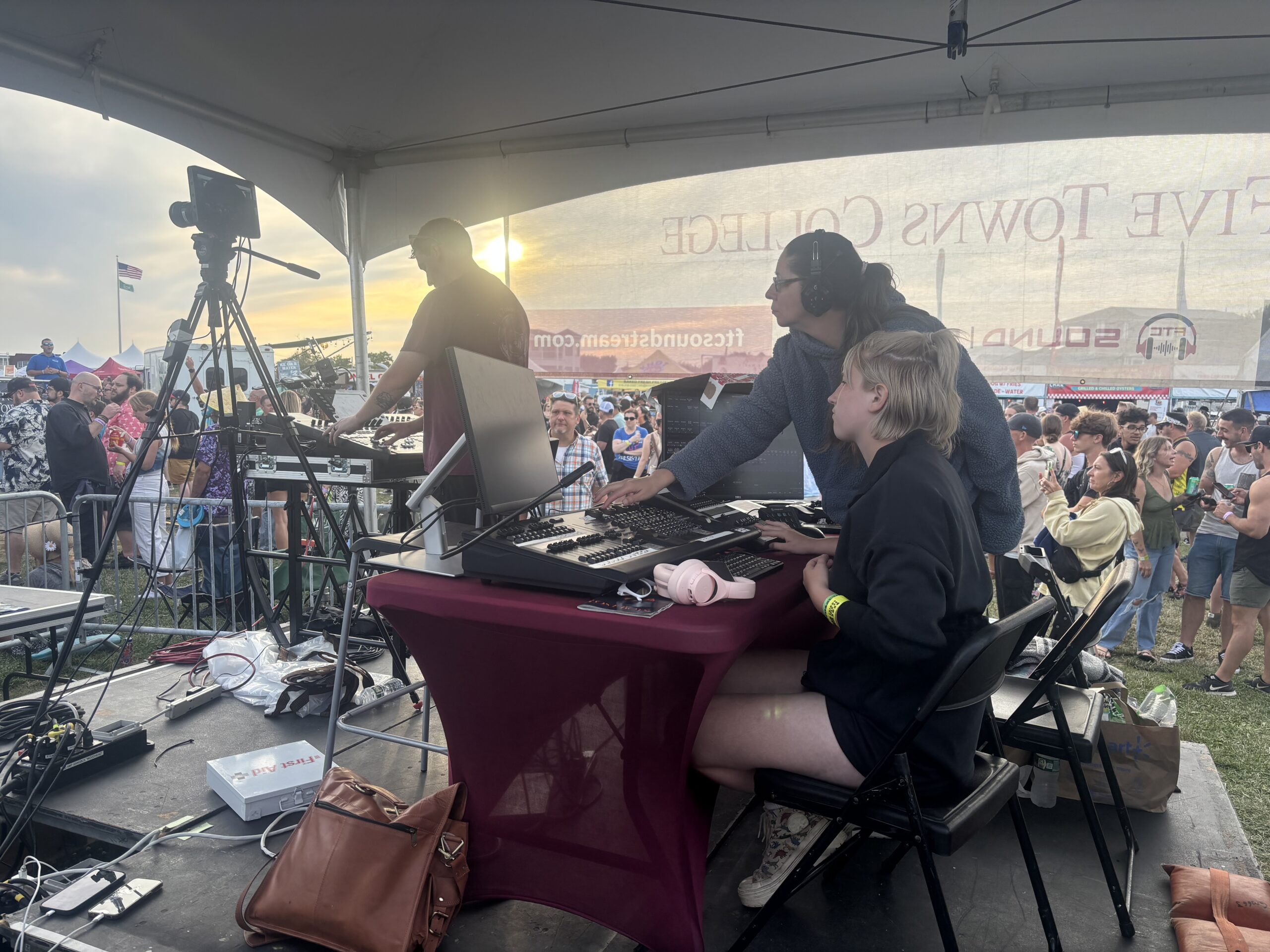
The responsibility has given Rooney experience on a level unlike anything she has previously encountered. “This is definitely a level of operation I haven’t gotten to work with yet, so this has been a really good opportunity to get my hands dirty and learn what I will be doing out in the professional world,” she said.
Film & TV major Frank Veltry operated one of several cameras used to livestream the acts from the Five Towns stage. Veltry could often be found in the front barricade capturing the action up close. “Being able to hold a camera and record a real professional event has been so much fun, and I can’t wait to do it again tomorrow,” said Veltry.
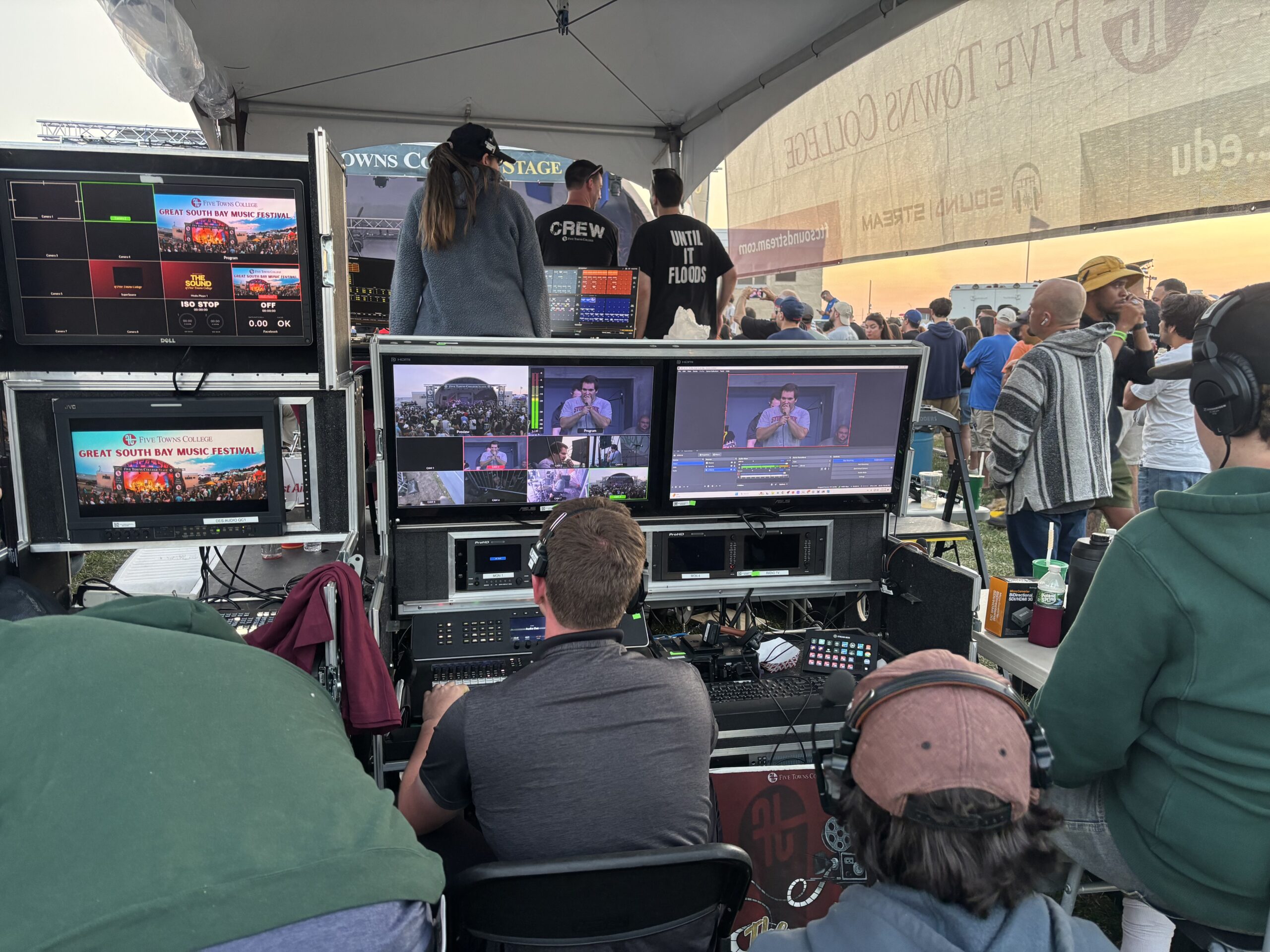
What made the Five Towns College tent at the Great South Bay Music Festival especially impressive was the collaboration. Rather than working independently, students from different majors combined their individual skills to create a fun, smooth, and professional production. In addition to what the festival audience saw on the stage, all of this coverage was also streamed for audiences at home, whether it be the video livestream on Five Towns College’s YouTube Channel or via radio on the FTC Sound Stream.
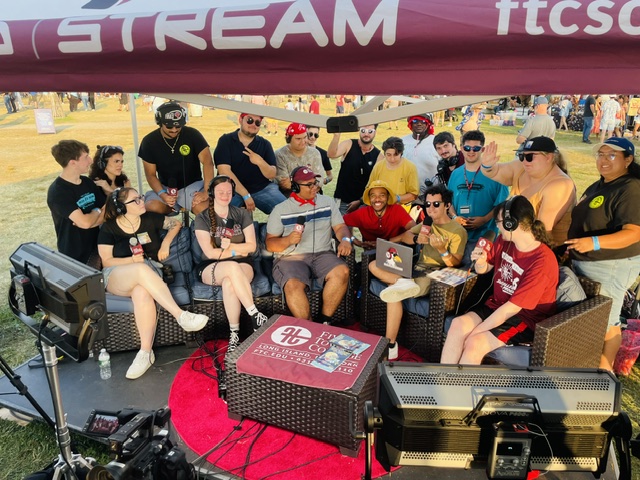
Mass Comm student and musician Jack Barton, who regularly appears on-air for college radio and television broadcasts, found the Great South Bay Music Festival especially rewarding to cover as a journalist. “It is great practice for me because we are interviewing real bands that are performing. Making those in-person live connections with people as an interviewer is difficult to master, so this is really helping,” Barton said.
For festival attendees, the Five Towns College multimedia production tent was just another tent in a sea of people moving around the Shorefront Park festival grounds. For the students running the operation, it represented an opportunity to turn classroom learning into real-world professional experience.