

Album Review: Tia Blake and the folk tradition
Tune in TONIGHT @ 8PM on the FTC Sound Stream to hear Tia Blake's songs with special commentary by Grace Bonamico.
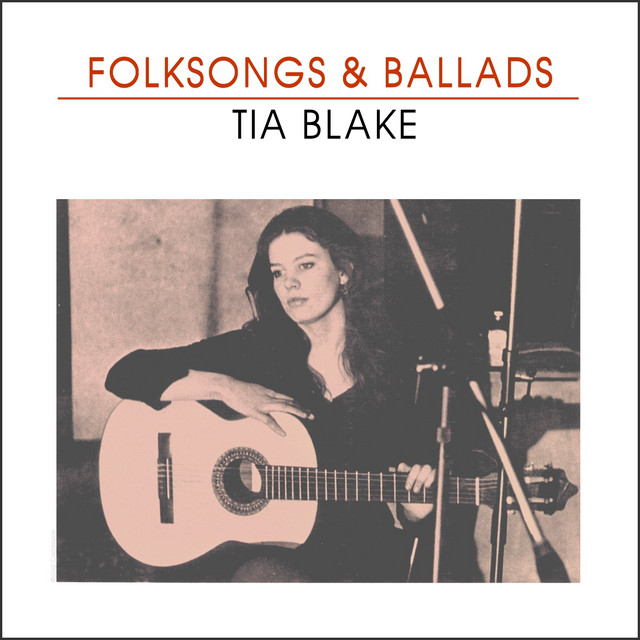
TONIGHT @ 8PM on the FTC Sound Stream……Grace Bonamico hosts Retrospective Album Review: Tia Blake.
READ Grace Bonamico’s handy song guide as a companion piece for tonight’s special radio broadcast.
When Tia Blake (born Christina Elizabeth Wallman) died in 2015, the one album she released in her lifetime, Folksongs & Ballads, was still something of a hidden gem. Originally released only in France, it quietly existed on the fringes of the folk world for decades. It wasn’t until the album found its way onto streaming platforms and later into the algorithm-driven world of TikTok that it began to reach a wider audience, ultimately earning its place as a modern cult classic.
The music on this album is deeply rooted in the Anglo-American folk tradition. Many of these songs existed for centuries before Blake ever stepped into a recording studio, passed down through generations by oral tradition. Their histories are layered and complex, carrying traces of migration, struggle, love, and loss. In many ways, the stories behind these songs are just as compelling as Blake’s own.
In 1971, Blake was just nineteen years old, an American living in Paris and working at a local record shop. It was there that she met two guitarists who would become her collaborators, credited simply as “Her Folk Group.” Together, they recorded Folksongs & Ballads, a sparse, intimate album defined by delicate guitar work and Blake’s hauntingly soft voice. It would be the only album released during her lifetime before she stepped away from music entirely, eventually building a career as a writer and editor under her given name.
She later graduated from Smith College and would go on to write about her search for her father in Vietnam during the Vietnam War. Despite the deeply personal and artistic life she built, her music remained largely undiscovered by the wider public until years after her death.
In 2018, that began to change. A second collection, Paris and Montreal Demos, 1973–1976, was released posthumously. While it includes alternate versions of songs from Folksongs & Ballads, it also features original material that Blake wrote and recorded but never released. These recordings offer a rare glimpse into what her musical voice might have become had she continued.
Taken together, these two albums form a quiet yet powerful body of work, rich in musical and historical texture. Whether drawn from centuries-old ballads or Blake’s own writing, every track feels carefully held, almost fragile in its delivery.
- Betty and Dupree
The album opens with a story rooted in the American South. “Betty and Dupree” traces back to a real-life jewelry heist in Atlanta in 1921, telling the tale of Frank Dupree, a man who risks everything for love. Blake’s delivery is understated and intimate, less like a performance and more like a story being passed directly from one person to another.
2. Black Is the Colour
“Black Is the Colour” is widely believed to have Scottish origins, with references to the River Clyde in its lyrics. In the United States, it became associated with early Appalachian traditions. Blake’s version feels almost weightless, her voice blending so seamlessly with the guitar that it seems to drift rather than stand apart.
3. Wish I Was a Single Girl Again
Often described as a married woman’s lament, this song dates back to early 20th-century Appalachia. Blake sings it with quiet sincerity that suggests lived experience, as though she’s stepping into the emotional reality of the song rather than simply interpreting it.
4. I’m a Man of Constant Sorrow
Many recognize this song from the film O Brother, Where Art Thou?, but its origins date back to 1913, when it was attributed to Kentucky fiddler Dick Burnett under the title “Farewell Song.” Blake’s version leans into its folk roots, with gentle guitar and a vocal delivery that softens the song’s inherent hardship.
5. Jane, Jane
“Jane, Jane” is a variation of the African-American spiritual “Children, Go Where I Send Thee.” As a cumulative song, it builds with each verse, traditionally used as both a teaching tool and a Christmas carol. Blake’s interpretation emphasizes its hypnotic repetition, creating a rhythm that feels almost meditative.
6. Lost Jimmie Whalen
A traditional North American ballad, particularly popular in Ontario and Eastern Canada, this song tells the story of a woman mourning a drowned loved one. Often set to melodies like “The Lass of Glenshee,” it carries a distinctly Scottish influence. Blake’s version leans into that sense of quiet grief, letting the story unfold without embellishment.
7. The Rising of the Moon
Originating in Ireland around 1865, this ballad reflects on the failed Irish Rebellion of 1798. It’s a song of resistance and memory, and while Blake’s delivery is restrained, the weight of its history still lingers beneath the surface.
8. Hangman
Also known as “The Maid Freed from the Gallows,” this centuries-old ballad began as a British broadside before crossing into Appalachia. Structured as a desperate plea for salvation, it builds tension with each verse. Blake’s calm, almost detached delivery makes it all the more chilling, as if the outcome has already been accepted.
9. Turtle Dove
Dating back to 18th-century England, where it was known as “The True Love’s Farewell,” this song evolved as it traveled across regions and generations. Blake’s voice is particularly captivating here, gently pulling the listener into its melancholy without ever raising above a hush.
10. Plastic Jesus
Written in 1957 by Ed Rush and George Cromarty, “Plastic Jesus” has become something of a cult favorite. On the surface, it’s a satirical song about a dashboard ornament, but Blake’s earnest delivery transforms it into something unexpectedly reflective, almost reverent in tone.
11. Polly Vaughn
An enduring Irish tragedy, “Polly Vaughn” tells the surreal story of a hunter who accidentally kills his lover, mistaking her for a swan. The imagery is haunting, and the song has appeared in countless forms over the years. The guitar work here is especially striking, echoing Bert Jansch’s style and creating a dreamlike backdrop for a story that feels almost mythic.
The Paris and Montreal Demos include four songs not found on Folksongs & Ballads: “My Father Is a Lonely Man,” “Yellow Hair,” “Country Boy,” and “White Bird.” Though less is known about these tracks, they are believed to be Blake’s original compositions. They carry the same quiet intimacy as her earlier recordings, offering a glimpse into a more personal, less traditional side of her artistry.
For a closer listen to a selection of Tia Blake’s music, tune into the FTC Sound Stream tonight at 8:00 pm.