
What is the Insurrection Act — and why Trump says he might use it in Minneapolis
A rarely used law from the 1800s is suddenly back in the spotlight as protests grow over immigration enforcement.
By Daniel Garcia and James Suckle
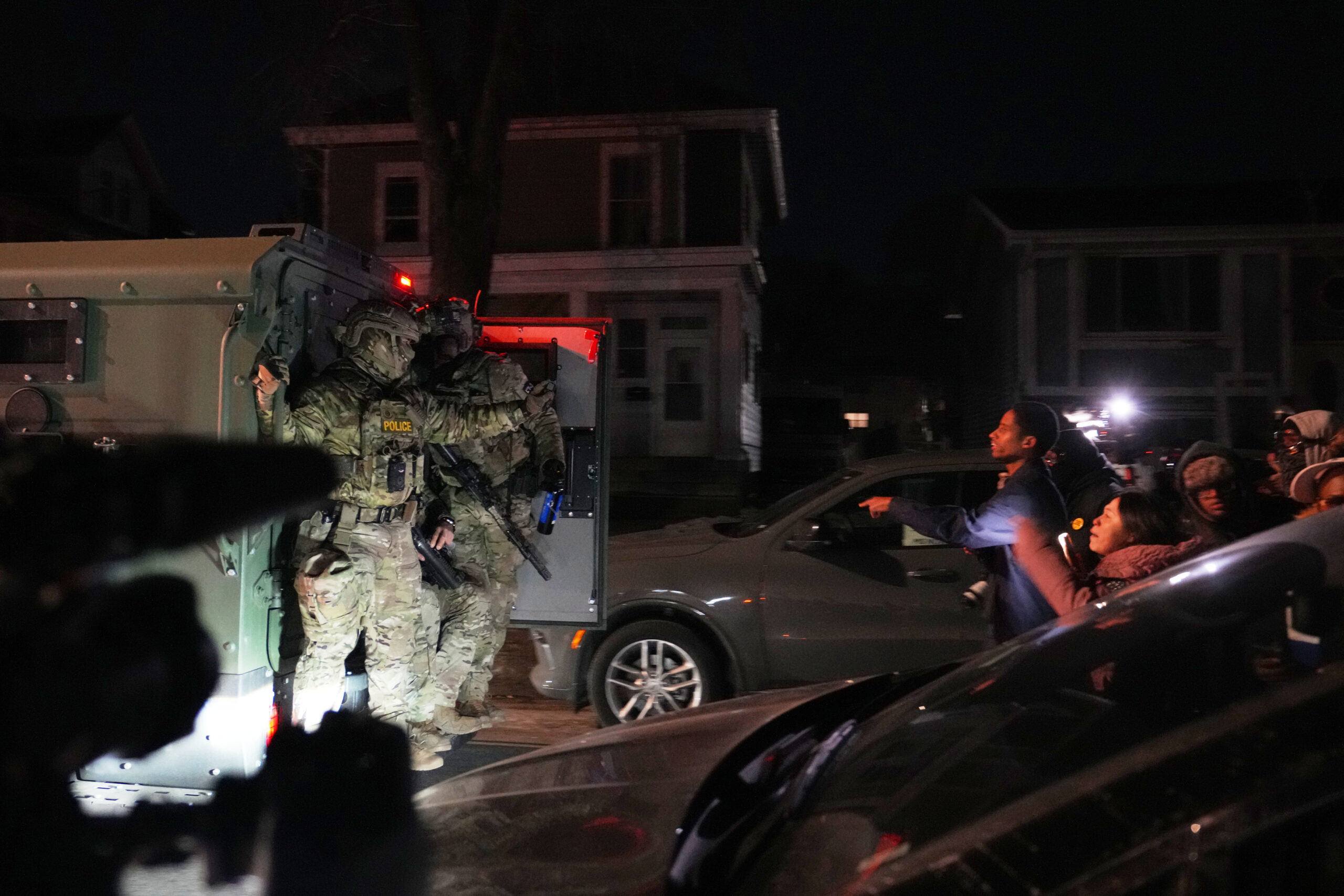
President Donald Trump said today he may use the 220-year-old Insurrection Act to deploy troops in response to ongoing protests in Minneapolis tied to immigration enforcement. The statement follows days of unrest after an Immigration and Customs Enforcement officer fatally shot Renee Good earlier this month, and another federal officer shot and wounded a man during a confrontation this week.
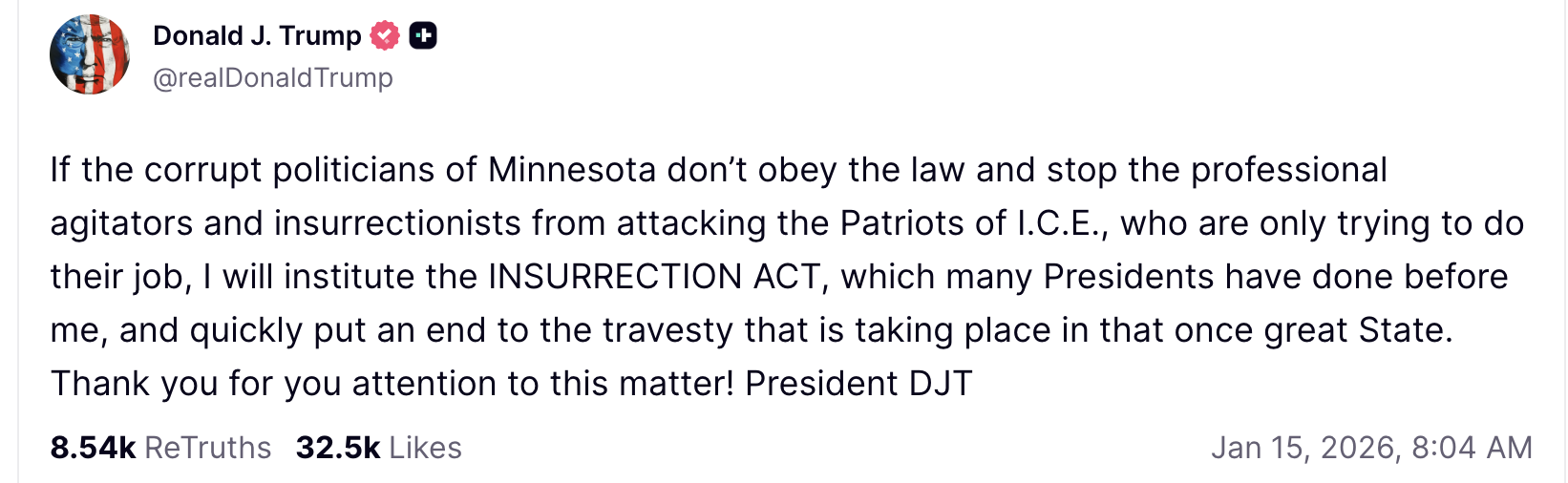
Trump said in a social media post that if Minnesota leaders do not stop what he called “agitators,” he would invoke the Insurrection Act to restore order. In the post, Trump said he would use the law if state leaders fail to stop “professional agitators and insurrectionists” from attacking federal officers who are “only trying to do their job.“ State and city officials have not asked for military help and have criticized the growing federal presence.
The Insurrection Act first appeared in law in 1807. It allows the president to deploy the U.S. military or federalize the National Guard to enforce laws inside the United States when local or state authorities cannot or will not do so. It is one of the few exceptions to the rule that the military cannot act as domestic law enforcement.
The law has been used more than two dozen times, mostly in the 19th and early 20th centuries. In modern history, it has been used during major crises. President Dwight D. Eisenhower sent military personnel to Little Rock, Arkansas, in 1957 to enforce school integration, which federal courts had previously ordered, but Arkansas authorities refused to follow. During the 1960s, Presidents John F. Kennedy and Lyndon B. Johnson employed legal methods to defend civil rights activists who fought for racial equality throughout Southern America.
The federal troops received their last deployment during 1992 when President George H.W. Bush deployed them to Los Angeles to stop the riots that erupted after the Rodney King trial verdict. State officials requested federal assistance because their local police forces had reached their maximum capacity.
The current situation in Minneapolis is inconsistent with how the Insurrection Act has typically been used in the past. Local leaders are resisting the expanding federal authority, which they used to request help from state officials. The city now hosts its highest number of federal officers, but state and city officials claim these officers generate more issues than they do solutions. Minneapolis Mayor Jacob Frey said the federal force is about five times the size of the city’s police department. Gov. Tim Walz said the situation has “long ago stopped being a matter of immigration enforcement; instead, it’s a campaign of organized brutality against the people of Minnesota by our own federal government.”
As protests continue, Trump has not said exactly when or how he would invoke the Insurrection Act. Legal experts explain that the law provides presidents with extensive authority, yet the law faces two main challenges during its implementation, which stem from political resistance and historical limitations. Trump’s highlighting of this act will further spark the national debate about presidential power and military operations inside the United States.